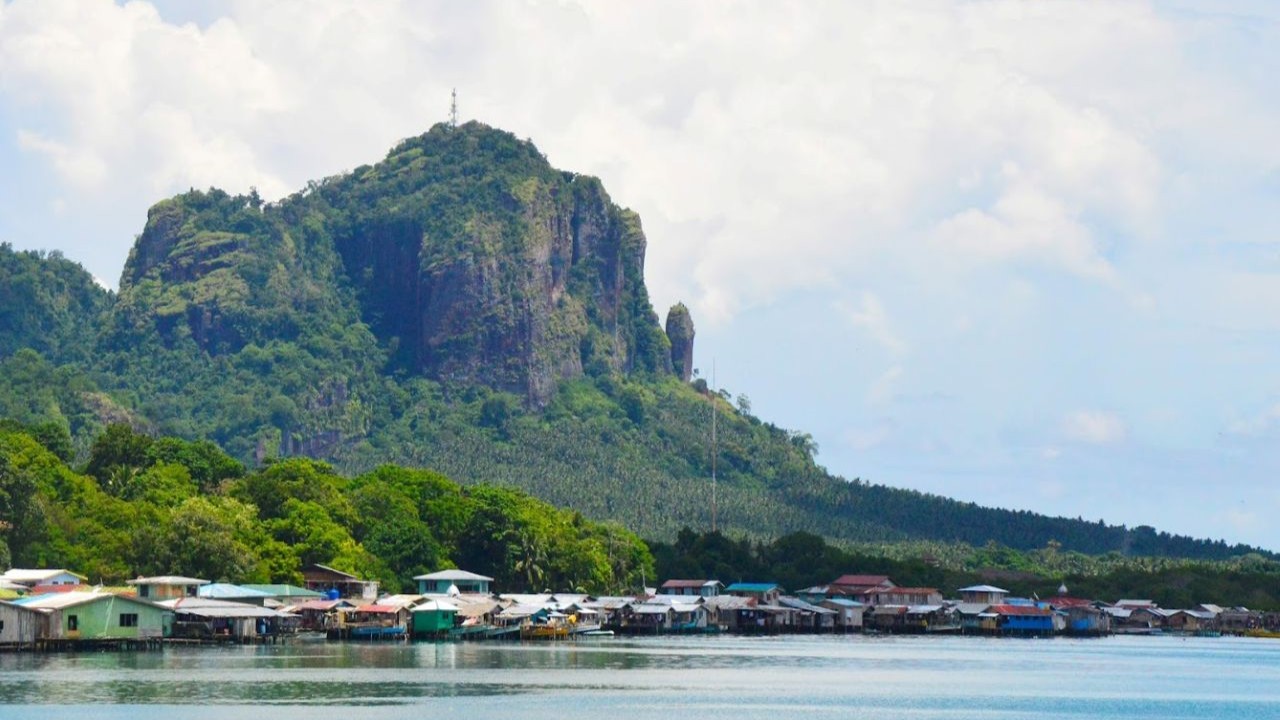
Bongao, the capital of Tawi-Tawi province, is emerging as a hub for tourism, trade, and halal market development. Photo courtesy of Mindanao Development Authority.
The Philippines is building on BARMM’s geographic advantage and centuries-old trade ties to unlock growth opportunities.
The Philippines is positioning the Bangsamoro Autonomous Region in Muslim Mindanao (BARMM) as the country’s “primary export gateway” in BIMP-EAGA. According to the Mindanao Development Authority (MinDA), this strategy advances BARMM’s economic integration into the subregion to open more opportunities for trade and investment. MinDA is the lead coordinating agency for BIMP-EAGA in the Philippines.
Located in Mindanao, BARMM is composed of the provinces of Basilan, Lanao del Sur, Maguindanao Del Norte, Maguindanao Del Sur, and Tawi-Tawi, the Special Geographic Area in Cotabato province, and Cotabato City, the regional center. It has a large Muslim population and a long history of barter trade with Borneo, which forms part of BIMP-EAGA.
Through the Bangsamoro Economic Corridor Initiative, BARMM will be developed into a trade hub by expanding and modernizing ports and logistics and improving maritime connectivity. Trade facilitation and customs, immigration, quarantine, and security (CIQS) systems will be aligned with ASEAN standards. Priority sectors include halal industries, aquaculture, and fisheries.
"BARMM has opportunities in halal industries, agriculture, fisheries, tourism, energy, logistics, and value-added production,” said Assistant Secretary and Deputy Executive Director of MinDA Romeo Montenegro at a business forum in August. “The challenge is to translate these opportunities into bankable investments and durable business partnerships."
MinDA organized the forum in partnership with the European Chamber of Commerce of the Philippines (ECCP), Ayala Foundation, and the European Union to expand private sector participation in BARMM and BIMP-EAGA. investments and durable business partnerships," he noted.
The forum highlighted memorandums of understanding and partnerships between MinDA, Ayala Foundation, Aboitiz Power, cooperatives, and private firms in renewable energy, agriculture, education, and cross-border trade.
Planned and ongoing infrastructure projects
The Mindanao Investment Program includes 31 projects in BARMM, which are estimated to cost nearly 90 billion Philippine pesos (PhP), about $1.4 billion. Projects that support the creation of a trade hub include the PhP3-billion Tawi-Tawi Special Ecozone, the PhP2.2-billion Polloc Freeport and Ecozone in Maguindanao Del Norte, PhP4.5-billion Basilan Airport, and the PhP212-million upgrading of Bongao Port in Tawi-Tawi.
The Tawi-Tawi Special Ecozone is identified as a potential transshipment hub. It is in the pre-project preparation stage.
The modernization of Polloc Freeport, a key node in South–Central Mindanao Development Corridor, is expected to cut transport cost of products, spur economic activities, and open more direct links for international trade, particularly for halal products. According to the 2nd Bangsamoro Development Plan 2023–2028 (Midterm Update), the freeport is “undergoing a strategic upgrade to become a climate-resilient, world-class container terminal, positioning itself as the primary logistics gateway for the BIMP-EAGA subregion by 2028.” The World Bank and Royal HaskoningDHV, an engineering consulting firm, provide technical support for the project.
The feasibility study and master plan for the proposed Basilan Airport in Lamitan are being prepared. The airport is expected to support economic expansion in Lamitan City, which is seeing increased infrastructure development and tourism activity and the revival of the rubber industry.
The upgrading of Bongao Port is ongoing. Bongao, the capital of Tawi-Tawi, is emerging as a hub for tourism, trade, and halal market development.
BIMP-EAGA strategy
By increasing participation in BIMP-EAGA, BARMM expects to boost its economic development and competitiveness within Mindanao and the subregion. The BARMM BIMP-EAGA Strategic Plan 2025–2028 serves as a roadmap for tighter subregional integration. It aligns priority development projects with BIMP-EAGA Vision 2035 vision, the 10-year roadmap that seeks to transform the subregion into a “Socially Inclusive, Open, Aligned and Resilient (S.O.A.R.) BIMP-EAGA for Shared Economic Prosperity and Sustainability.”
“The strategy [4-year development plan] emphasizes leveraging BARMM’s geographic advantage, improving connectivity, and aligning priority sectors with regional value chains to expand trade, tourism, and investment opportunities,” said the midterm update of the Bangsomoro development plan.
“Leveraging its strategic air and seaport infrastructure, the region offers investors direct access to neighboring markets. This comparative advantage is reinforced by the Bangsamoro Organic Law, which mandates regulation of traditional barter trade and countertrade, thereby creating a distinct legal framework for cross-border commerce,” said the midterm update.
The Bangsamoro Maritime Industry Authority (BMARINA) has approved guidelines for BIMP-EAGA barter trade routes to “to streamline procedures, improve transparency, and support sustainable regional trade and economic cooperation among participating countries.”
Blue Economy Corridor
At the forum in August, among the priority BIMP-EAGA initiatives advanced by BARMM is the proposed Blue Economy Corridor that will connect Polloc, Basilan, Tawi-Tawi, and Sabah.
The proposed corridor is envisioned to “create wider market access for halal, agricultural, fisheries, seaweed, and other Bangsamoro products,” said Minister Farserina A. Mohammad of the BARMM Ministry of Trade, Investments, and Tourism (MTIT).
Efforts to strengthen the blue economy include production support for fisherfolk. BARMM has provided them seaweed seedlings and nurseries, fingerlings, fishing gear, and halal fish feed. It has set up facilities to ensure high-quality, disease-resistant seedlings.
The national government has also identified Basilan as a potential site for establishing a hydrogen power plant. Hydrogen energy is emerging as a key part of the global blue economy, offering a potential solution for decarbonizing the maritime sector.