BIMP-EAGA is an intergovernmental economic cooperation program with the private sector serving as the engine of growth. The role of the public sector, both at the national and local government levels, is to provide a conducive policy and regulatory environment that promotes and facilitates economic initiatives of the private sector.

BIMP-EAGA Vision 2035
On 7 May 2026, the Special BIMP-EAGA Summit in Cebu, Philippines adopted a new 10-year strategic roadmap.
Under BIMP-EAGA Vision (BEV) 2035, the subregion aspires to become a “Socially Inclusive, Open, Aligned and Resilient (S.O.A.R.) BIMP-EAGA for Shared Economic Prosperity and Sustainability.” Covering the period 2026 to 2035, BEV 2035 builds on earlier accomplishments of BIMP-EAGA and its previous guiding documents: Roadmap to Development 2006–2010, Implementation Blueprint 2012–2016, and BIMP-EAGA Vision (BEV) 2025. The new vision also reflects the recommendations from the BEV 2025 midterm performance review, Accelerating Cooperation Together (ACT): Progress and Prospects.
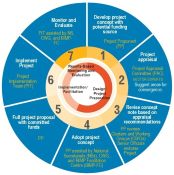
Project Management Cycle under BIMP-EAGA Vision 2035
Under Vision 2035, the project management process seeks to ensure project quality at entry. Proposals should focus on projects rather than activities. Projects should meet any or a combination of criteria.

Special Economic Zones for Shared Prosperity: Brunei Darussalam–Indonesia–Malaysia–Philippines East ASEAN Growth Area
Policy makers and stakeholders need to intensify strategic collaboration to make their SEZs more competitive.

Case Studies on Sustainable Ecotourism, Agriculture, and Fisheries in BIMP-EAGA
This compilation of case studies from Brunei Darussalam, Indonesia, Malaysia, and the Philippines showcases collaborative approaches to environmental management in the tourism, agriculture, and fisheries sectors.

Develop a Green Action Plan for Your City
The BIMP-EAGA Green Cities Initiative helps local governments develop a comprehensive green city action plan.