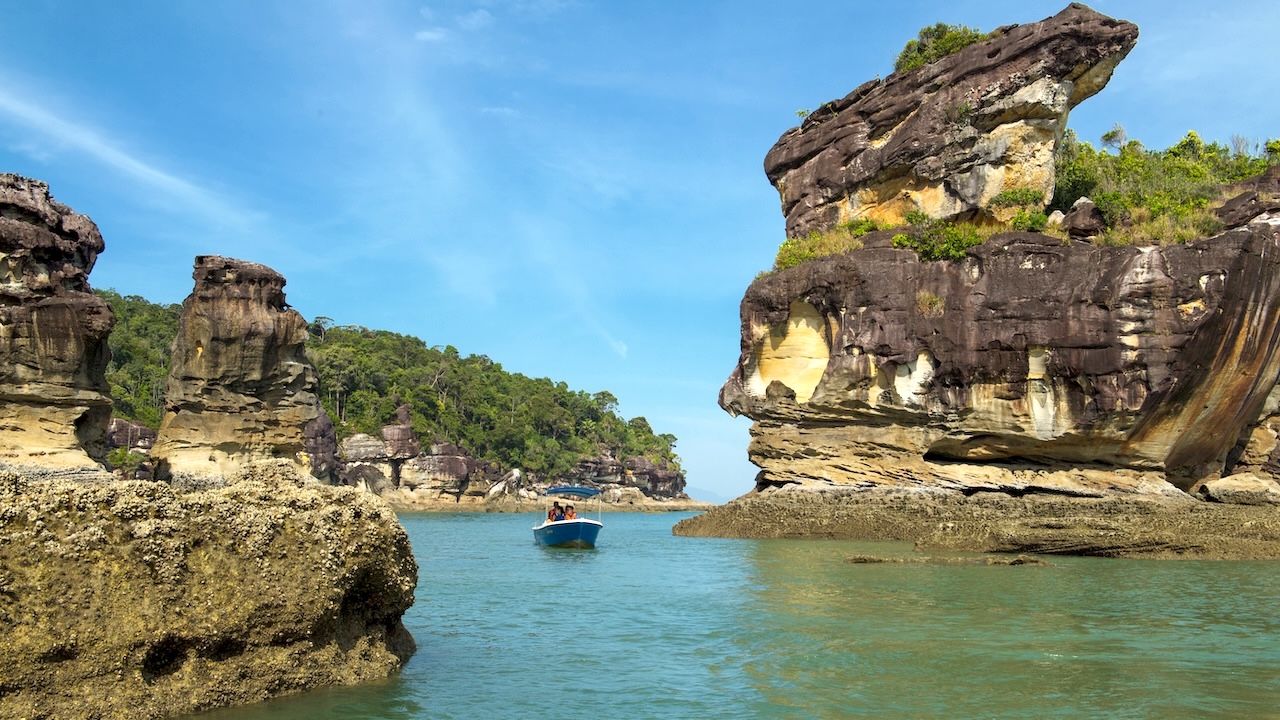
UNESCO sites demonstrate that places managed through a people-and-nature approach can simultaneously conserve biodiversity, sustain cultures and livelihoods, regulate climate, and build resilience. Photo credit: Courtesy of Sarawak Delta UNESCO Global Geopark.
The unique global network of more than 2,260 UNESCO-designated sites across the world is helping people and nature co-exist, and even thrive, according to a new report. These sites are in over 175 countries, covering more than 13 million square kilometers, an area larger than the People’s Republic of China and India combined.
People and Nature in UNESCO-Designated Sites: Global and Local Contributions said these living landscapes, 15 of which are found in BIMP-EAGA member countries, support the livelihoods of some 900 million people worldwide, while harboring a significant share of global biodiversity and contributing to climate regulation.
“The findings are clear: UNESCO sites are delivering for both people and nature,” said UNESCO Director-General Khaled El-Enany in a statement. “Inside these territories, communities thrive, humanity’s heritage endures, and biodiversity is holding on while it collapses elsewhere.”
The report is the first global assessment of UNESCO sites and the first to examine UNESCO's entire network of World Heritage Sites, Biosphere Reserves, and Global Geoparks as one interconnected system.
Complementary roles
The three UNESCO designations play complementary roles. They work best as an interconnected network rather than as isolated conservation tools.
• World Heritage Sites protect places of outstanding cultural or natural value to humanity.
• Biosphere Reserves integrate biodiversity conservation with sustainable development and learning.
• Global Geoparks protect geological heritage while promoting education and sustainable local development.
The report is relevant for BIMP-EAGA with the subregion being home to four Global Geoparks, seven World Heritage Sites, and four Biosphere Reserves. Recognizing the importance of UNESCO sites, rainforests, and natural parks in the subregion, BIMP-EAGA's Vision 2035 development agenda, which prioritizes biodiversity conservation and tourism promotion, commits member countries to safeguarding these assets. Target initiatives include enhancing policies on biodiversity safeguards, conserving or restoring ecosystem sites, and piloting or scaling up nature-based solutions.
UNESCO sites in BIMP-EAGA
Global Geoparks | World Heritage Sites | Biosphere Reserves |
|---|---|---|
|
|
|
Natural capital
According to the report, the global network of UNESCO-designated sites demonstrates that places managed through a people-and-nature approach can simultaneously conserve biodiversity, sustain cultures and livelihoods, regulate climate, and build resilience.
“By measuring the global value and contributions of these sites, this report reveals what we stand to lose if they are not prioritized. It is an urgent call to scale ambition, recognizing UNESCO sites as strategic assets in tackling climate change and biodiversity loss, and investing now to protect ecosystems, cultures, and livelihoods for generations to come,” said El-Enany.
Over the past 50 years or so, wildlife populations within UNESCO sites have been better protected compared to global trends. They have remained relatively stable despite a 73% decline in monitored wildlife populations worldwide since 1970. UNESCO sites support up to a third of the last remaining elephants, tigers, and pandas, and at least 1 in 10 great apes, giraffes, lions, rhinos, and dugongs.
At least 25% of the UNESCO sites overlap with indigenous peoples' lands and territories. More than 1,000 languages are represented in these sites, accounting for roughly 15% of the world's living languages.
Around 10% of the global population depend on these protected areas for livelihood. Over 260 sites support pastoralist and transhumance traditions involving more than 290 identified groups.
The UNESCO-designated sites collectively absorb a net 700 million tonnes of carbon dioxide annually, roughly equivalent to annual fossil-fuel emissions of Germany, which is among the world’s 10 largest greenhouse gas emitters. Healthy ecosystems within the sites help regulate climate, store carbon, and strengthen resilience to climate change.
According to the report, areas containing UNESCO-designated sites generate approximately 10% of global gross domestic product. About 50% of UNESCO-designated sites are in global tourism hotspots. World Heritage sites alone receive roughly 1.5 billion visitors annually.
In BIMP-EAGA, there is an initiative to package UNESCO sites in the subregion as part of in-country and multi-country tourism circuits along economic corridors. This closely aligns with the ASEAN Tourism Strategic Plan, which includes the creation of nature-based tourism corridors.
More investments needed
The UNESCO report called for stronger protection and investment to safeguard these sites against increasing climate and environmental pressures. Nearly 90% of UNESCO-designated sites are at a high level of environmental stress due to human activities. The increase in human pressure has historically been driven mainly by land-use changes linked to agriculture, logging, and infrastructure development, including roads.
The report warned that by failing to act now, pressures will intensify and natural systems in more than one in four sites could reach critical tipping points by 2050, potentially undermining both ecosystems and the communities that depend on them.
Every 1°C of warming avoided could halve the number of sites exposed to major disruption by the end of the century. Scaling up integrated resource management, restoration, inclusive governance, and targeted nature-positive policies, alongside increased investment, is essential to sustain and expand these proven approaches and strengthen resilience.