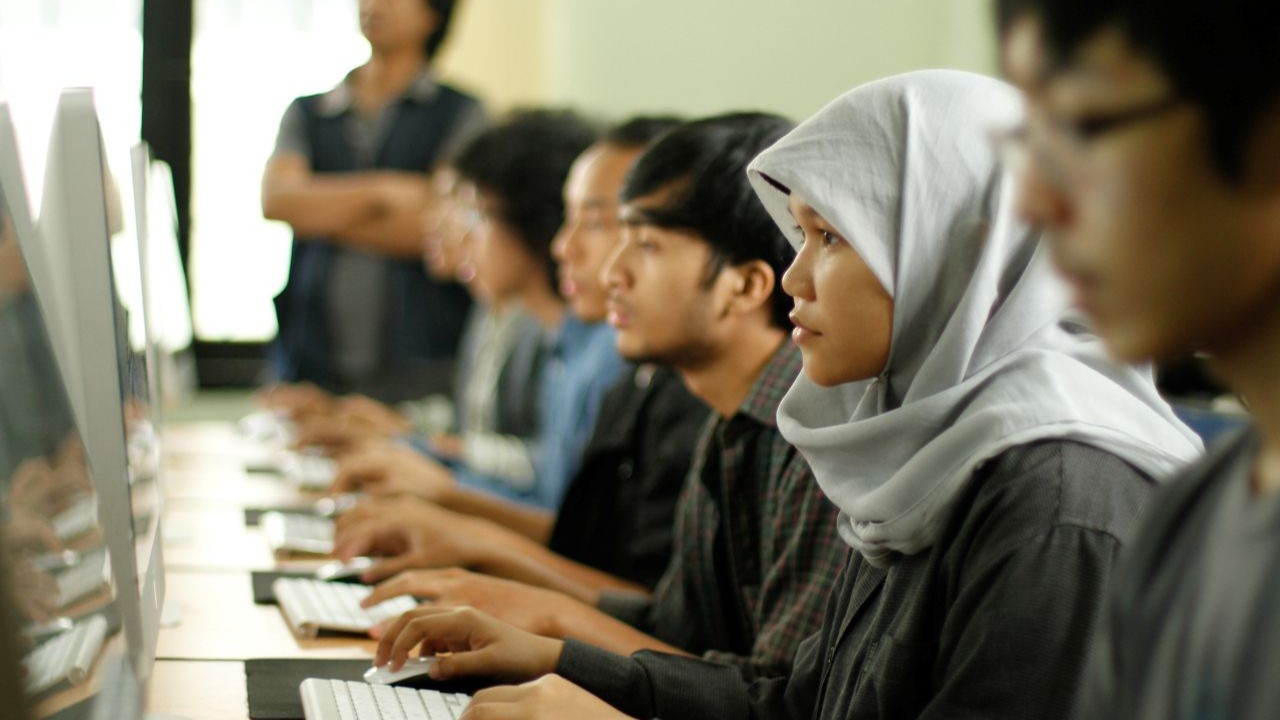
BIMP-EAGA is laying the foundation for creating innovation ecosystems in the subregion through such initiatives as Startuphubs@BIMP-EAGA program, BIMP-EAGA Network of Technical and Vocational Education and Training, and facilitating digital talent mobility. Photo credit: Asian Development Bank.
Digitalization has become a major driver of growth and resilience, enabling economies to overcome sudden shocks and expand through technology-driven solutions and innovation.
BIMP-EAGA’s new 10-year strategic roadmap, Vision 2035, aspires to achieve seamless digital connectivity in the subregion. Digitalization is a key component of the roadmap, which seeks to transform BIMP-EAGA into “a socially inclusive, open, aligned, and resilient” subregion that is prosperous and sustainable. Digital solutions will be tapped to “seamlessly connect communities, drive trade and investment, create quality jobs, elevate public service delivery, and improve quality of life.”
The first BIMP-EAGA Digital Cluster and Digital Alliance Meeting was held in the Philippines in August. Digital leaders, policymakers, innovators, industry stakeholders, and development partners gathered in Tagum City, the capital of Davao del Norte, to “strengthen cooperation on digital governance, connectivity, innovation, cybersecurity, and digital economy development across the BIMP-EAGA subregion.” According to the Mindanao Development Authority, the meeting also discussed “how digital technologies can support the subregion’s blue and green economies through applications in sustainable fisheries, renewable energy, climate-resilient agriculture, circular solutions, trade, education, governance, and public services.”
Studies show that digital technologies can not only boost productivity but also enhance resilience and accelerate recovery from crisis or shocks (such as the COVID-19 pandemic). These can also advance regional cooperation and integration.
ASEAN’s adoption of the Digital Economy Framework Agreement (DEFA) this November is expected to double the economic contribution of digitalization in Southeast Asia. BIMP-EAGA is aligning its digital initiatives with DEFA, which is expected to help harmonize policies and regulations and make it easier, safer, and more seamless for businesses and consumers to participate in the digital economy.
Another ASEAN initiative is developing a region-wide QR framework that promises to make paying abroad as easy as paying at home.
Building the network
BIMP-EAGA comprises resource-rich but sparsely populated areas that are far from national capitals. While progress has been made to improve digital connectivity in these areas, there are still critical gaps in digital infrastructure. Connectivity remains concentrated in the cities, which serve as the business, commercial, and financial centers of states and provinces in the subregion.
At the special summit in Cebu, Philippines last May, the leaders of BIMP-EAGA noted “significant progress in addressing digital disparities through a robust pipeline of projects and the continuous expansion of BIMP-EAGA's Information and Communication Technology (ICT) Infrastructure.” Priority infrastructure projects include the Pelan Jalinan Digital Negara or JENDELA Program, which is constructing telecommunication towers and transmitters and upgrading to 5G in underserved and rural areas in Sabah and Sarawak, and the private sector-funded BIMP-EAGA Submarine and Terrestrial (BEST) Cable Project, which will link all four BIMP-EAGA countries via a hybrid communications platform of sub-sea cables, satellite, or terrestrial systems.
Initiatives at the national level are expected to boost digitalization and connectivity across the subregion. According to state-owned Unified National Networks, Brunei Darussalam has built up its mobile infrastructure—extending network coverage to 98.7% of populated areas and deploying 5G-capable base stations nationwide. The coverage of its fixed network infrastructure has reached 96%.
Indonesia launched the SATRIA-1 satellite project under a public–private partnership in 2023, which seeks to give high-speed internet access to 150,000 people in underserved areas by installing 501,112 public service points. In areas included in the BIMP-EAGA subregion, the estimated number of public service points is 23,900 in Sulawesi, 19,300 in Kalimantan, and 18,500 in Papua and Maluku. According to network intelligence provider Ookla, 4G availability now exceeds 90% across the country, including in Kalimantan, Sulawesi, Maluku, and North Maluku, but 5G availability is still low.
The Sambungan Kabel Dasar Laut Madani (Salam) initiative will build a submarine cable system linking Peninsular Malaysia, Sabah, and Sarawak to support “the expansion of broadband and 5G services, while also driving growth in cloud infrastructure, data centers, artificial intelligence (AI), and other emerging digital industries.”
Activated in 2024, the Philippine Domestic Submarine Cable Network (PDSCN) is the longest and highest-capacity domestic submarine fiber cable network in the country, connecting the archipelago from Quezon province in Luzon to Zamboanga in Mindanao. Meanwhile, Phases 4 and 5 of the National Fiber Backbone under the Philippine Digital Infrastructure Project will deploy more than 1,000 kilometers of high-speed, government-owned fiber network to connect key Mindanao cities, including Butuan, Cagayan de Oro, Bukidnon, Zamboanga, and Davao.
Upgrading capacity
In addition to improving infrastructure, BIMP-EAGA is building the capacity to harness digital opportunities and emerging technologies, such as AI. It is promoting digital collaboration across borders to facilitate the sharing of best practices, increase e-commerce, and develop innovation ecosystems.
An example is the partnership between Sarawak Digital Economy Corporation Berhad and the Palawan-based agritech startup Farm Konekt, which are collaborating to promote smart agriculture and improve market access for smallholder farmers—an initiative previously implemented by Brunei Darussalam-based AgromeIQ.
Consumer interest in AI is high in BIMP-EAGA countries. According to the e-Conomy SEA 2025 report, Brunei Darussalam, Indonesia, Malaysia, and the Philippines are in the world’s top 20 list for interest in multimodal AI. Majority of workers surveyed are learning to use AI, while nearly half of them already use it.
Investment in data centers, which serve as the backbone of AI, is expected to drive data center capacity in the ASEAN region by 180%, which is higher than the project growth for the rest of Asia and the Pacific, the report says.
Southeast Asia has also become a destination of choice for microchip companies as the global semiconductor supply chain undergoes restructuring due to trade tensions and surging AI demand.
The Malaysian state of Sarawak is gearing up to become a chip design hub as part of Malaysia’s plans to upgrade into higher value-added parts of the semiconductor supply chain. Indonesia and the Philippines have similar plans. This presents opportunities for increased trade connections and integration into global supply chains.
Nurturing innovation
Earlier BIMP-EAGA initiatives lay the foundation for creating innovation ecosystems in the subregion. These include the Startuphubs@BIMP-EAGA program, a network of startup hubs or technology business incubators. Under the program, startup hubs were created in Bandar Seri Begawan, Brunei Darussalam; Pontianak and Makassar in Indonesia; Kota Kinabalu and Kuching in Malaysia, and Palawan, Zamboanga, and Davao in the Philippines.
The BIMP-EAGA Network of Technical and Vocational Education and Training promotes cross-border partnerships in education and skills training and facilitates knowledge exchange.
Under Vision 2035, BIMP-EAGA aims to facilitate digital talent mobility within the subregion.
Potential applications
BIMP-EAGA is exploring digital solutions in priority sectors. In tourism, these include immersive digital tools to improve visitor experiences. In green cities, digital applications may be used to monitor, report, and verify increases or reductions in carbon emissions, and strengthen climate resilience through early warning systems. In agriculture, climate-smart technologies can help scale mitigation and adaptation efforts. For example, digital tools, such as drones, enable smallholder farmers to adapt to climate change better and maximize productivity.
Among the project proposals being studied are the development of a BIMP-EAGA Connect Card, BIMP-EAGA Cross-Border E-Wallet Integration, and Sungai Tujuh E-Commerce Consolidation Hub.
Powered by secure, green, and innovative digital solutions, these projects and initiatives are expected to advance BIMP-EAGA’s agenda for a digitally integrated, inclusive, resilient, and sustainable subregion.